Physical Address
304 North Cardinal St.
Dorchester Center, MA 02124
Physical Address
304 North Cardinal St.
Dorchester Center, MA 02124

Are you paying for 1000Mbps (Gigabit) speeds but only seeing a fraction of that on your laptop? The culprit is likely your hardware. Choosing the right WiFi router is the difference between seamless 4K streaming and the dreaded buffering wheel.
Whether you are on a traditional cable connection or have upgraded to ultra-fast fiber, your router is the “brain” of your home network. Here is everything you need to know about selecting and troubleshooting the fastest routers on the market today.
Most people use the “all-in-one” modem-router combo provided by their ISP. While convenient, these are rarely the fastest routers available. To truly unlock your bandwidth, you need a standalone device that can handle multiple high-traffic streams.
| Pros | Cons |
| Better Range: Eliminates dead zones in large homes. | Initial Cost: High-end models can be an investment. |
| Higher Speeds: Better handling of Gig-speed fiber. | Setup: Requires manual configuration (PPPoE/Bridge Mode). |
| Advanced Features: Parental controls and VPN support. | Compatibility: Must ensure it works with your specific ISP. |
When shopping for compatible routers, you must match the router’s technology to your internet type.
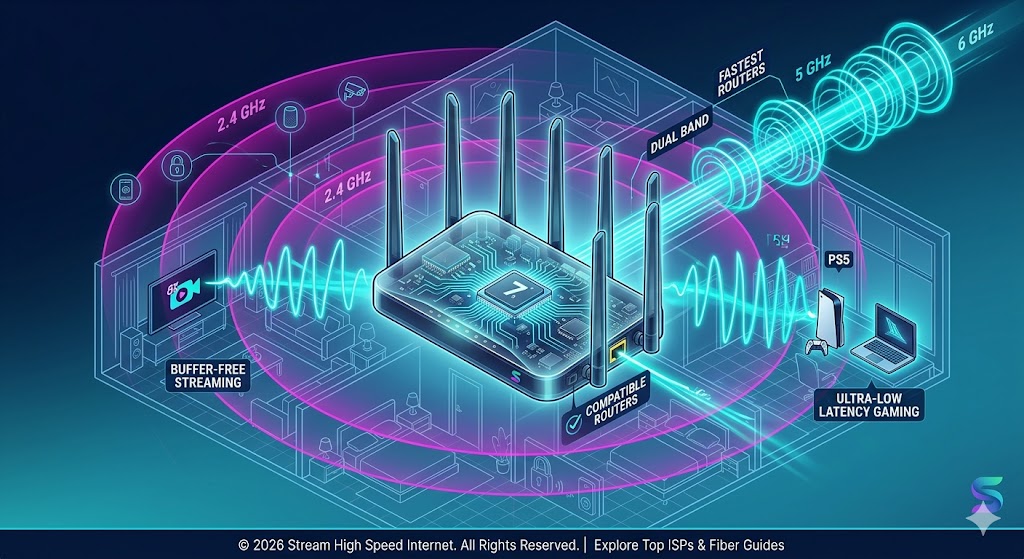
If you want a stable connection, you must use dual band routers. These devices broadcast two different signals:
For the ultimate “future-proof” home, consider Tri-Band or WiFi 7 routers, which add a 6 GHz band to clear up network congestion entirely.
Even the fastest routers can run into trouble. Before you call your ISP, try these steps:
The best WiFi router for you depends on your home size and usage. If you are a heavy gamer or a professional streamer, investing in a high-end standalone unit is non-negotiable.
For a deeper dive into which specific models work best with various providers, check out this guide on best ISP-compatible routers to ensure you’re making a smart investment.